Driving Iceland’s Secret Edge: Where City Lights Meet Wild Horizons
You know that feeling when the road stretches empty before you, and the sky melts into surreal colors? That’s Iceland on four wheels. Far beyond the Blue Lagoon’s steam, hidden urban gems blend with raw nature in ways you’d never expect. I drove the ring roads, chased midnight sun glows over Reykjavik’s outskirts, and found cityscapes shaped by fire and ice. This isn’t just a getaway—it’s a journey where pavement meets wilderness, and every turn tells a story. From quiet coastal towns glowing under northern lights to volcanic horizons that shimmer at midnight, Iceland reveals itself slowly, best seen through the windshield of a well-prepared traveler. It's a land where urban life doesn't fight nature—it listens to it, learns from it, and sometimes, simply steps aside.
The Allure of Self-Drive in Iceland
Traveling through Iceland by car offers a rare kind of freedom—one that transforms sightseeing into storytelling. The island’s compact population and expansive landscapes make public transportation limited, especially beyond major routes. A rental vehicle, therefore, becomes more than convenience; it is access to Iceland’s soul. Whether navigating the Golden Circle or veering off Route 1 toward remote fjords, self-driving allows travelers to set their own rhythm, pause for unexpected waterfalls, or linger at deserted beaches where puffins nest in summer. This autonomy is particularly valuable for families and small groups who value flexibility in timing and comfort.
Iceland’s road network is well-maintained but shaped by its dramatic geology and climate. The Ring Road (Route 1) circles the island and connects most towns, but many secondary roads—especially F-roads in the highlands—are gravel, unpaved, and require four-wheel drive. Even during summer, weather can shift rapidly, turning clear skies into blinding snow or gale-force winds within hours. Drivers must remain alert to sudden fog, strong crosswinds near cliffs, and river crossings on rural tracks. Winter driving adds further complexity, with shorter daylight, icy surfaces, and the need for studded tires. However, with preparation, these challenges become part of the adventure rather than obstacles.
Choosing the right vehicle is crucial. Compact cars suit city-to-city travel on paved roads, while SUVs or campervans offer better stability on rough terrain and in adverse conditions. Many travelers opt for campervans to combine mobility with accommodation, reducing the need for frequent hotel bookings and allowing spontaneous overnight stops near lakes or mountain passes. Regardless of vehicle type, checking tire condition, fuel levels, and emergency supplies before departure is essential. GPS navigation helps, but downloading offline maps ensures guidance when signal drops in remote valleys.
Safety remains paramount. Seat belts are mandatory, speed limits are strictly enforced, and mobile phone use while driving is prohibited unless hands-free. Road signs are clear and mostly in Icelandic and English, though some place names may be unfamiliar. Local drivers tend to be cautious and courteous, respecting the power of nature over haste. Tourists are encouraged to do the same—driving calmly, yielding to livestock (yes, sheep roam freely), and never straying from marked roads to protect fragile vegetation. Ultimately, self-driving in Iceland is not just about getting from point A to B; it’s about engaging with the country’s pulse, one mindful mile at a time.
Reykjavik’s Urban Pulse: A Gateway to the Wild
Reykjavik, though Europe’s northernmost capital, feels more like a village grown wise. Its colorful rooftops—painted in soft reds, blues, and yellows—stand out against the gray-green hills and ever-changing sky. As the starting point for most Icelandic journeys, the city offers a gentle introduction to the nation’s unique balance between modern living and elemental forces. The drive into Reykjavik from Keflavík International Airport takes about 45 minutes along Route 4, revealing first glimpses of the capital nestled beside Faxaflói Bay. From the road, landmarks rise like sentinels: the striking silhouette of Hallgrímskirkja, a church inspired by basalt columns, and the shimmering glass façade of Harpa Concert Hall, reflecting the sea and sky in endless variations.
What makes Reykjavik remarkable is not its size—it has fewer than 130,000 residents—but how thoughtfully it integrates with its environment. Geothermal energy heats nearly every building, reducing reliance on fossil fuels and minimizing air pollution. Sidewalks in central areas are heated to melt winter snow, a small but telling detail of how infrastructure adapts to climate. Architecture favors simplicity and functionality, echoing Scandinavian design principles, yet always with a nod to volcanic textures and natural forms. Street art flourishes on building sides, often depicting mythological creatures or environmental themes, adding layers of cultural expression to the urban canvas.
For drivers, navigating Reykjavik is straightforward. Traffic is light compared to larger cities, and parking is available though sometimes paid in the downtown core. Roundabouts are common, promoting smooth flow without traffic lights. Key attractions are walkable from central hotels, but having a car allows easy access to nearby natural sites like Mount Esja, just across the bay, or the Seltún geothermal area on the Reykjanes Peninsula. These short drives illustrate how seamlessly city life transitions into wild terrain—within 20 minutes, one can go from coffee shops to steaming fumaroles.
Reykjavik also serves as a cultural touchstone. Museums like the National Museum of Iceland and the Reykjavik Art Museum offer context for the country’s history and creativity. Local cafes serve traditional lamb soup and skyr, while fish markets highlight the importance of the sea. Yet even amid these comforts, the presence of nature is never far. On clear days, snow-capped peaks loom in the distance; on stormy ones, wind howls off the ocean with a force that reminds visitors of Iceland’s untamed spirit. The city does not hide from this reality—it embraces it, preparing travelers emotionally and practically for what lies ahead.
From Capital to Coast: The Drive Beyond the City
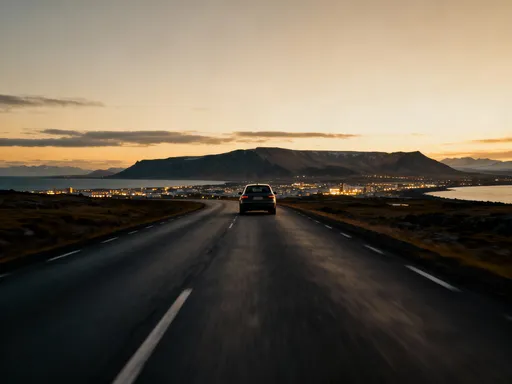
Leaving Reykjavik, the landscape begins to shift almost immediately. The dense clusters of homes thin out, replaced by open fields, lava rock expanses, and the occasional farmstead with sheep grazing nearby. Routes 40 and 41 lead east and south, respectively, offering panoramic views of Faxaflói Bay. From elevated stretches, drivers can see the entire curve of the coastline, with fishing boats dotting the water and distant mountains fading into mist. The Seltjarnarnes Peninsula, just southwest of the city, is home to the Grótta Lighthouse and a protected bird sanctuary—accessible via a short detour and ideal for a quiet pause before continuing onward.
What defines this transition is not just geography, but atmosphere. Streetlights vanish quickly, replaced by sparse lighting that preserves the night sky’s clarity. Road design follows the natural contours of the land, avoiding unnecessary excavation or deforestation. Guardrails are minimal, emphasizing the openness rather than enclosing it. This deliberate minimalism creates a sense of exposure—not danger, but awareness. One feels watched by the land, as if the mountains and sea are observing each passing car with quiet curiosity.
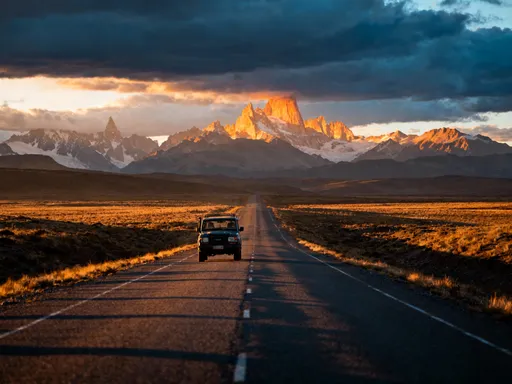
Along the southern route, the terrain becomes increasingly dramatic. Moss-covered lava fields stretch for miles, their emerald hues glowing under overcast skies. Small rivers cross the road, bridged by simple stone or metal structures. In spring and summer, wildflowers bloom along the shoulders, while in winter, snow blankets everything except the dark rock. The contrast between the engineered road and the raw surroundings is striking—pavement as a thin ribbon laid across an ancient, living landscape.
Despite the isolation, infrastructure remains reliable. Gas stations appear every 30 to 50 kilometers, often doubling as convenience stores and rest stops. Many offer hot coffee, sandwiches, and restrooms, making them lifelines for long-distance travelers. Some include information boards with maps and weather updates, reinforcing the importance of staying informed. Mobile signal is generally strong near towns and main roads, though it weakens in valleys and tunnels. These practical supports allow exploration without sacrificing safety, ensuring that the journey remains enjoyable rather than arduous.
Blue Lagoon: Myth vs. Reality on the Road
No discussion of Iceland’s accessible wonders is complete without addressing the Blue Lagoon. Located on the Reykjanes Peninsula about 20 minutes from Keflavík Airport, it is one of the country’s most visited attractions. From the road, the site appears almost surreal—a milky-blue pool nestled in a black lava field, surrounded by steam and modern buildings. Route 41 and Route 43 provide direct access, with clear signage guiding drivers to the parking area. While often crowded and commercialized, the lagoon’s origins are deeply natural: its water comes from a nearby geothermal power plant, where superheated groundwater is used for electricity and then cooled for bathing.
The experience begins long before entering the water. The approach road cuts through jagged lava rock, emphasizing the otherworldly setting. Parking is ample but requires reservation during peak seasons. Visitors must book spa access in advance, choosing between basic entry, comfort, or luxury packages. The changing rooms are clean and efficient, with lockers and showers required before immersion. Once inside, the warm, mineral-rich water feels silky, rich in silica and sulfur, known for soothing skin conditions like psoriasis. The sensation of floating in 38°C (100°F) water while snow falls lightly around is unforgettable.
Yet the Blue Lagoon is more than a tourist stop—it’s a symbol of Iceland’s sustainable energy use. The Svartsengi Power Plant, visible from parts of the site, produces both electricity and hot water for nearby communities, demonstrating how geothermal resources support daily life. Waste heat and water are recycled into the lagoon, turning industrial output into wellness tourism. Educational displays explain this process, offering insight into how Iceland generates nearly 100% of its electricity from renewable sources—primarily hydro and geothermal.
For many, the lagoon serves as a first or last impression of Iceland—a place to relax after a flight or rejuvenate before departure. While some purists argue it’s too commercial, others appreciate its accessibility and comfort. Either way, it represents a unique intersection of nature, technology, and human ingenuity. And from the driver’s seat, seeing its glowing waters emerge from the volcanic dark reminds us that even in Iceland’s wildest places, civilization finds a way to coexist—gently, thoughtfully, and with respect.
Urban Oases in Unlikely Places
Beyond Reykjavik, Iceland’s towns are small but significant. Kópavogur, Hafnarfjörður, and Akureyri may not appear on every traveler’s map, yet they offer vital moments of connection, comfort, and culture. These communities are not mere pit stops—they are living expressions of Icelandic resilience and design. Kópavogur, just south of the capital, is known for its family-friendly parks and the striking Perlan-like dome of the Vogluskóli mountain. Hafnarfjörður, a harbor town with Viking roots, features basalt-stone buildings and a lively weekend market. Akureyri, in the north, is often called “Iceland’s second city,” with botanical gardens, cozy cafes, and a university that brings youthful energy to the Arctic landscape.
What unites these towns is their harmony with surroundings. Buildings are low-rise, using materials that echo the earth—wood, stone, and metal in muted tones. Roads wind gently through neighborhoods, prioritizing pedestrian safety and quiet. Gas stations, grocery stores, and restaurants are clustered near main intersections, making refueling and restocking simple. Many towns have public swimming pools heated by geothermal water, where locals gather year-round, reinforcing community bonds even in isolation.
From a driver’s perspective, these towns break the monotony of long stretches without services. They provide opportunities to stretch legs, enjoy a hot meal, or chat with residents who often welcome visitors with genuine warmth. Roadside cafes serve rye bread, lamb stew, and freshly baked pastries—simple foods with deep flavor. Some towns feature small museums or art galleries, offering glimpses into regional history and creativity. These pauses are not distractions; they enrich the journey, grounding it in real life rather than just scenery.
Urban planning in these areas emphasizes sustainability. Solar panels appear on rooftops, electric vehicle charging stations are increasingly common, and waste systems prioritize recycling. New developments avoid sprawling outward, instead focusing on efficient use of space. This mindfulness reflects a national ethos: take only what you need, leave no trace, and build with intention. For travelers, encountering these towns feels like discovering hidden chapters in a larger story—one where human presence enhances, rather than diminishes, the beauty of the land.
Night Drives and Midnight Sun: Cityscapes Under Changing Light
In Iceland, light is never constant—and that transforms the driving experience entirely. During summer, the midnight sun casts a golden glow long after 10 p.m., turning highways into ribbons of soft illumination. Shadows stretch endlessly, and the horizon never fully darkens. This phenomenon allows for extended exploration, with families taking evening drives to waterfalls or coastal lookouts without fear of darkness. The lack of true night changes perception: time feels elastic, moments linger, and the boundary between day and evening blurs beautifully.
Conversely, winter brings only a few hours of daylight, with the sun barely rising above the mountains. Yet this does not plunge the country into gloom. Instead, artificial lighting takes on poetic significance. Streetlamps in towns glow like constellations, their warm light reflecting off snow-covered roofs and icy roads. Coastal villages appear as clusters of gold against the vast dark, their windows glowing like hearths. In rural areas, minimal light pollution preserves the stars, making the Milky Way visible even from roadside pull-offs. For photographers and dreamers alike, these contrasts offer endless inspiration.
Driving at night in winter requires caution—roads can be slick, visibility low—but it also offers unmatched serenity. The silence is profound, broken only by wind or the hum of tires on pavement. On clear nights, the aurora borealis may appear, dancing in green waves across the sky. Pulling over to watch becomes a ritual, a shared moment of awe between travelers. Some routes, like those near Lake Mývatn or the Snæfellsnes Peninsula, are known for optimal northern lights viewing, especially when skies are clear and solar activity high.
Light also shapes urban aesthetics. In Reykjavik, the Harpa Concert Hall sparkles after dusk, its glass panels lit from within like a lantern. Hallgrímskirkja is subtly illuminated, standing tall against the night sky. Smaller towns use lighting sparingly but effectively, creating pockets of warmth without overwhelming the natural darkness. This balance reflects a deeper value: visibility without intrusion, presence without dominance. For drivers, moving through these shifting lights feels like traveling through time and mood, each kilometer revealing a new layer of Iceland’s quiet magic.
Why the Journey Matters More Than the Destination
In a world obsessed with arrival, Iceland teaches the grace of passage. The true essence of travel here is not found solely in ticking off landmarks, but in the spaces between them—the empty roads, the sudden rain showers, the sheep blocking the way, the unexpected rainbow over a fjord. Every mile driven is a conversation with the land, a slow unfolding of stories written in rock, ice, and wind. It’s in these moments, often unplanned, that connection happens: with nature, with oneself, with the quiet rhythm of a place that refuses to be rushed.
The fusion of city and wild is not accidental. It is intentional, cultivated over generations. Icelandic culture respects boundaries—between people and nature, development and preservation, movement and stillness. Urban areas exist not to conquer the landscape, but to serve as shelters, waypoints, and cultural anchors. They provide warmth, food, and connection, then gracefully recede as the road leads back into open country. This balance invites travelers to adopt a similar mindset: to move with purpose, pause with intention, and observe with humility.
Ultimately, driving Iceland’s secret edge is about more than scenery. It’s about transformation. The solitude of the road clears mental clutter. The vastness puts problems into perspective. The beauty restores wonder. And the slow pace—necessitated by winding roads and frequent stops—reintroduces a forgotten luxury: presence. In a society where speed is often praised, Iceland offers an alternative. It says: drive slowly. Look closely. Listen. The answers aren’t just at the destination—they’re in the dust on your windshield, the steam rising from a thermal pool, the way the light hits a mountain at dawn.
So take the wheel. Let the road guide you. Between city lights and wild horizons, there is a third space—one of reflection, renewal, and deep peace. That is the real Iceland. And it waits for no one but reveals itself to all who are willing to journey mindfully, mile by mindful mile.