This Is What Happens When You Chase Wild Landscapes at the Edge of the World
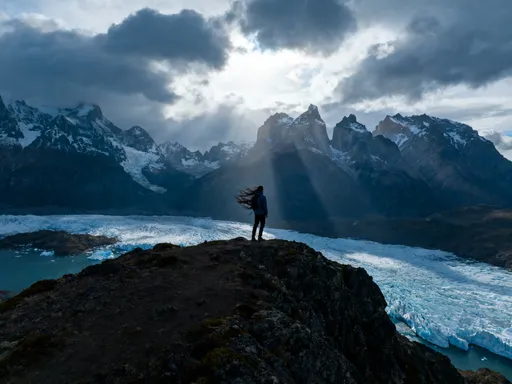
Standing at the southern tip of South America, where mountains plunge into icy seas and wind howls through ancient forests, I felt like I’d reached the end of everything. Ushuaia isn’t just a destination—it’s a raw, untamed encounter with nature in its purest form. From glacier-kissed trails to silent subantarctic woodlands, every moment here feels alive. The air carries a sharp, clean scent of moss and saltwater, and the horizon blurs where snow-dusted peaks meet the restless Beagle Channel. If you're chasing authenticity over comfort, this city at the edge of the world will redefine what travel truly means. It is not about ticking off landmarks but about feeling the pulse of a planet still wild at heart.
Arriving at the End of the Earth
Ushuaia greets visitors like a frontier outpost carved between towering mountains and the cold embrace of the Southern Ocean. As the southernmost city in the world, it holds a quiet distinction that resonates the moment you step off the plane or arrive by road from the north. The landscape is immediate and unapologetic—rugged, windswept, and alive with movement. Snow often dusts the peaks even in summer, and the city’s colorful houses cling to the hillsides as if bracing against the elements. Despite its growing reputation as a tourist gateway, Ushuaia retains the soul of a remote settlement, shaped by isolation and resilience.
Geographically, Ushuaia sits on the island of Tierra del Fuego, separated from the South American mainland by the Strait of Magellan. This position makes it a strategic and symbolic threshold—both the final stop on the Pan-American Highway and the last urban outpost before Antarctica. Ships departing from the port often carry scientists, supply crews, or expedition travelers bound for the frozen continent. For many, arriving in Ushuaia feels like crossing a threshold not just of latitude, but of mindset. The routines of modern life begin to fade the moment you step outside, replaced by the rhythms of tides, wind, and seasonal change.
The transition from urban space to wilderness is remarkably swift. Within ten minutes of leaving the city center, you can find yourself walking along coastal paths where seabirds cry overhead and the only footprints in the mud may be those of a fox or a passing hiker. The surrounding mountains—part of the Andes’ southernmost extension—rise sharply, cloaked in lenga and ñire forests that turn golden in autumn. These natural buffers ensure that no matter how many visitors arrive each year, Ushuaia never fully loses its sense of being on the edge. The city doesn’t dominate the landscape; it exists within it, humbled by its scale and power.
Exploring Tierra del Fuego National Park
Just 12 kilometers west of Ushuaia lies Tierra del Fuego National Park, a protected expanse that captures the essence of subantarctic wilderness. Spanning over 68,000 hectares, the park is a mosaic of ecosystems shaped by glacial history, oceanic climate, and millennia of ecological adaptation. Visitors enter through a modest gate, but what unfolds beyond is anything but ordinary. Here, dense forests of lenga and southern beech give way to open peat bogs, rocky shorelines, and alpine meadows that bloom with wildflowers in the brief summer months. The park is not just scenic—it is ecologically significant, preserving habitats found nowhere else on Earth.
Two of the most accessible and rewarding trails in the park are the Ensenada Bay Circuit and the Pipo River Path. The Ensenada Bay trail follows a gently undulating route along the southern shore of Lake Roca, offering panoramic views of the surrounding mountains and the shimmering waters of the Beagle Channel in the distance. The path is well-maintained but rugged in places, with wooden boardwalks bridging wet sections and stone steps navigating steeper inclines. Hikers often pause at the halfway point, where a wooden observation deck overlooks a tranquil cove—a perfect spot to listen to the wind and watch for movement in the trees.
The Pipo River trail, meanwhile, takes visitors deeper into the forested interior. This path follows a clear, fast-moving stream that cascades over moss-covered rocks and disappears into narrow gorges. The air here is cooler and damper, rich with the scent of wet bark and decaying leaves. Birdsong is frequent—especially the sharp call of the Magellanic woodpecker—and the forest floor is carpeted with mosses and lichens that thrive in the constant humidity. Both trails are suitable for moderately fit travelers and can be completed in three to four hours, making them ideal for a half-day excursion from Ushuaia.
Wildlife in the park is present but elusive. Guanacos, distant relatives of llamas, are occasionally seen grazing in open areas, their slender silhouettes moving gracefully across the hills. Andean condors, among the largest flying birds in the world, can sometimes be spotted soaring along thermal updrafts near cliff faces. The most secretive resident is the culpeo fox, a reddish-brown canid that hunts at dawn and dusk. Observing these animals requires patience and quiet movement. Responsible travelers maintain a respectful distance, avoid feeding wildlife, and stay on designated trails to minimize disturbance. The park’s ecosystems are fragile, and even small disruptions can have lasting effects.
The Magic of Off-Trail Experiences
While marked trails offer safety and structure, some of the most memorable moments in Ushuaia come from venturing slightly off the beaten path—where permitted and with proper caution. These experiences are not about reckless exploration but about embracing the spirit of discovery in a landscape that rewards curiosity. In certain areas of the national park and along less-traveled coastal stretches, experienced hikers with local guidance can access secluded coves, hidden waterfalls, and stretches of shoreline untouched by tourism. These moments feel private, as if the wilderness has granted a rare audience.
One such experience unfolded during a guided trek along a lesser-known coastal ridge. After following a marked trail for nearly two hours, our group was led down a narrow, unofficial path by a local naturalist. The descent was steep and required careful footing, but the reward was immediate: a small, horseshoe-shaped bay where a colony of South American sea lions lounged on dark volcanic rocks. They barked lazily, undisturbed by our presence, while their pups waddled between tide pools. The sound of the waves, the smell of salt and seaweed, and the golden light of late afternoon created a scene of pure serenity. We stayed for only twenty minutes, observing quietly before retracing our steps—leaving no trace behind.
These off-trail moments are not about conquest but connection. They remind travelers that nature is not a stage set for human enjoyment but a living, breathing system that functions independently of us. The subantarctic environment is particularly sensitive—peat bogs take decades to recover from foot traffic, and fragile mosses can be destroyed in seconds. That is why any departure from official trails should be done with expert guidance, minimal group size, and strict adherence to low-impact principles. The goal is not to conquer new ground but to witness the quiet beauty that exists beyond the map.
For those seeking such experiences, working with certified local guides is essential. These individuals possess intimate knowledge of the terrain, weather patterns, and ecological boundaries. They know where it is safe and acceptable to step off the trail and where even the slightest intrusion could cause harm. Their presence ensures that exploration remains respectful and sustainable. In a place as remote and delicate as Ushuaia, the line between adventure and damage is thin—and responsibility must always come first.
Sailing the Beagle Channel: A Water-Level Perspective
No visit to Ushuaia is complete without experiencing the Beagle Channel from the water. Boat tours—ranging from short two-hour excursions to full-day expeditions—offer a unique vantage point on the region’s coastal ecology and history. From the deck of a vessel, the scale of the landscape becomes even more apparent. The mountains rise directly from the water’s edge, their bases eroded by centuries of wave action, while icebergs occasionally drift past, calved from distant glaciers. The channel itself is named after the HMS Beagle, the ship that carried Charles Darwin on his famous voyage in the 1830s—a journey that would later shape modern understanding of evolution and natural selection.
These tours provide access to wildlife and geological features unreachable by land. One of the most common stops is at a group of small islands known as the Les Eclaireurs Archipelago, where colonies of imperial cormorants nest on rocky outcrops. Their black-and-white plumage stands out against the gray stone, and their synchronized diving for fish is a marvel to watch. Nearby, sea lions often gather on submerged rocks, their barks carrying across the water. While orcas are not frequently seen, they do inhabit the deeper waters of the channel, and experienced captains sometimes spot their distinctive fins during calm conditions.
Beyond the wildlife, the cultural history of the region is woven into the journey. Long before European explorers arrived, the Yámana people lived along these shores for over 10,000 years, adapting to the harsh climate with remarkable ingenuity. They traveled in canoes made from lenga wood, wrapped in sea lion skins, and survived on a diet of shellfish, fish, and marine mammals. Their deep knowledge of tides, weather, and animal behavior allowed them to thrive in an environment that many today would consider inhospitable. Today, interpretive signs and guided commentary on boats help visitors appreciate this legacy, though much of the Yámana way of life was tragically disrupted by colonization and disease in the 19th century.
Sailing also offers a humbling sense of scale. As the boat moves further from shore, Ushuaia disappears from view, and the vastness of the Southern Ocean stretches ahead. On clear days, the Antarctic Peninsula is still over 1,000 kilometers away, but the feeling of proximity is real. Many expedition cruises to Antarctica depart from this very channel, and standing on deck, it is easy to imagine the journey ahead—through stormy seas, past icebergs, and into one of the last true wildernesses on Earth. The Beagle Channel is not just a scenic route; it is a corridor of exploration, past and present.
Glacier Encounters: Martial Glacier and Beyond
One of the most accessible and rewarding hikes near Ushuaia leads to the Martial Glacier, a tongue of ice that clings to the northern face of Mount Martial. The trail begins just beyond the city’s western edge, climbing steadily through lenga forest before emerging above the treeline. The full ascent covers about 6 kilometers round-trip with an elevation gain of nearly 400 meters, making it challenging but achievable for most visitors with moderate fitness. Along the way, the views expand with every switchback—first of the city, then of the Beagle Channel, and finally of the jagged peaks that guard the southern Andes.
Reaching the glacier itself is a moment of awe. Though smaller than it once was, the Martial Glacier remains a powerful presence, its surface cracked and crevassed, reflecting the sky in shades of blue and white. Visitors are advised to stay behind safety barriers, as the ice is unstable and prone to sudden shifts. Yet even from a distance, the cold radiating from the glacier is palpable, a reminder of the immense forces that shaped this landscape. Interpretive signs along the route explain the process of glacial formation and retreat, highlighting visible moraine lines—ridges of rock and debris left behind as the ice recedes.
These markers tell a story of change. Over the past century, the Martial Glacier has retreated significantly due to rising temperatures, a trend mirrored across the Andes and in polar regions worldwide. While the glacier will likely persist for decades, its future is uncertain. This reality adds a layer of urgency to the visit—not to mourn what is lost, but to witness what remains and to understand the delicate balance of Earth’s climate systems. For many travelers, standing before the glacier becomes a quiet moment of reflection on humanity’s role in environmental change.
For those seeking more remote glacial experiences, guided expeditions offer access to ice fields deeper in Tierra del Fuego or even day trips to the Pia Glacier, reachable only by boat and foot. These journeys require more time and preparation but provide an even deeper immersion in glacial landscapes. Whether viewed from a distance or approached up close, glaciers in this region are not just natural wonders—they are vital indicators of planetary health, silent witnesses to the passage of time and the impact of human activity.
When Nature Takes Control: Weather, Preparation, and Respect
One of the defining characteristics of travel in Ushuaia is the unpredictability of the weather. It is not uncommon to experience all four seasons in a single day—sunrise may bring clear skies and golden light, followed by midday winds strong enough to knock you off balance, then afternoon rain, and finally a sunset painted in brilliant hues as the clouds break. This volatility is not a flaw but a feature of subantarctic climates, where ocean currents, elevation, and latitude converge to create dynamic conditions. Travelers who understand and respect this variability are better equipped to enjoy the region without frustration or risk.
Proper preparation is essential. Layered clothing is the cornerstone of any wardrobe in Ushuaia. A moisture-wicking base layer, an insulating mid-layer such as fleece or wool, and a waterproof outer shell allow for quick adaptation to changing temperatures. Sturdy, waterproof hiking boots with good ankle support are non-negotiable, especially on muddy or rocky trails. Additional essentials include a warm hat, gloves, sunglasses (to protect against glare from snow and water), and a compact backpack with extra food, water, and a basic first-aid kit. Even on short hikes, conditions can shift rapidly, and self-reliance is key.
Equally important is the mental shift required to embrace uncertainty. In Ushuaia, rigid itineraries often fall apart—not because of poor planning, but because nature operates on its own schedule. A boat tour may be delayed due to high winds; a hiking trail may be temporarily closed after heavy rain. Rather than resisting these changes, the most rewarding approach is to accept them as part of the experience. Flexibility allows travelers to discover unplanned moments—a quiet café with a view, a conversation with a local, or an unexpected wildlife sighting. These are often the memories that last longest.
Respect for the environment underpins every aspect of responsible travel here. This means staying on marked trails, packing out all waste, avoiding loud noises that disturb wildlife, and never removing natural objects like stones or plants. It also means supporting local businesses that prioritize sustainability and conservation. The people of Ushuaia have learned to live in harmony with a demanding environment, and visitors can honor that legacy by traveling with humility and care.
Leaving With More Than Memories
As the plane climbs above Ushuaia and the patchwork of forests, lakes, and snow-capped peaks shrinks below, a quiet transformation becomes apparent. The journey was not just about seeing a new place but about feeling a shift within. In a world increasingly shaped by convenience and control, Ushuaia offers something rare: a reminder that some of the most profound experiences come from surrendering to the wild. There is power in standing before a glacier, in hearing the cry of a condor, in walking a trail where the only footprints may be your own. These moments do not entertain—they awaken.
Yet with that awakening comes responsibility. Places like Ushuaia exist on a delicate balance, sustained by cold temperatures, minimal human impact, and natural resilience. Every traveler who visits becomes part of that equation. The choices made—how we tread, what we take, what we leave behind—shape the future of these landscapes. Protecting them is not the sole duty of governments or scientists; it is a shared commitment. Simple actions—staying on trails, reducing waste, supporting ethical tour operators—collectively make a difference.
Ushuaia does not offer comfort. It offers truth. It shows us a world that does not revolve around human needs, where beauty is intertwined with harshness, and where awe arises not from spectacle but from presence. To travel here is to remember that exploration is not about conquering the unknown but about listening to it. And when we finally leave, we carry more than photographs. We carry a deeper understanding of our place within the natural world—and the quiet resolve to protect the edges of the Earth, where wilderness still breathes free.