Urban Jungle Magic: How Curitiba Turns Concrete into Community
Have you ever walked through a city and suddenly felt like the streets were breathing with life? That’s Curitiba. Far from the chaos you’d expect in a Brazilian metropolis, this city redefines urban living—where parks weave through neighborhoods, buses glide like clockwork, and every plaza feels intentional. I was stunned by how thoughtfully space is used here. It’s not just efficient; it’s alive. This is what smart city design looks like when people come first. More than a destination, Curitiba is a quiet revolution in urban planning, one that prioritizes accessibility, sustainability, and human connection. For travelers seeking cities that feel both modern and humane, this southern Brazilian capital offers a refreshing blueprint for how urban life can thrive without sacrificing soul.
First Impressions: A City That Feels Different
Arriving in Curitiba, visitors are immediately struck by a sense of calm. Unlike other large Latin American cities where traffic noise, pollution, and overcrowding dominate the experience, Curitiba feels orderly, green, and surprisingly peaceful. Wide avenues are flanked by trees, sidewalks are well-maintained and safe, and public art blends seamlessly into everyday spaces. There’s no overwhelming sensory barrage—no honking horns at every intersection, no dense clusters of informal vendors blocking pedestrian paths, no visible urban decay. Instead, the city unfolds with intention, as if every element has been carefully placed to serve both function and beauty.
This atmosphere is no accident. It stems from decades of forward-thinking urban planning that began in the 1960s, when city officials and planners made a radical decision: to design for people, not cars. At a time when many rapidly growing cities were embracing car-centric development, Curitiba chose a different path. The city’s master plan, led by architects and urbanists including Jaime Lerner, emphasized mixed-use zoning, high-density corridors along transit lines, and strict limits on sprawl. The result is a city that feels compact yet spacious, modern yet livable.
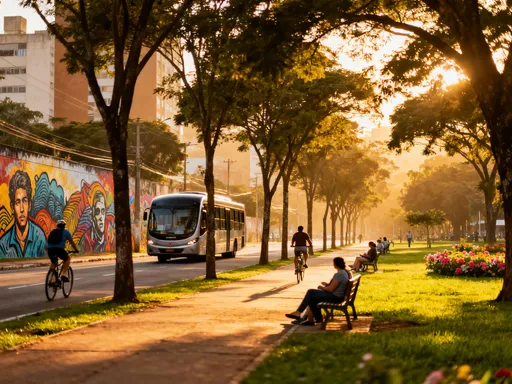
One of the most noticeable aspects of Curitiba is its walkability. Even in the downtown core, pedestrians are not an afterthought. Crosswalks are frequent, traffic signals give ample time to cross, and shaded walkways provide comfort during warmer months. Public plazas and small parks appear unexpectedly around corners, inviting pause and reflection. This attention to human scale fosters a sense of safety and belonging, particularly for women, families, and older adults who may feel marginalized in less pedestrian-friendly environments. The city’s layout communicates a clear message: you belong here, and your comfort matters.
Another striking feature is the absence of urban blight. While inequality exists, as it does in all major cities, Curitiba has managed to maintain a high standard of public space upkeep across neighborhoods. Graffiti is minimal, litter is rare, and public facilities are generally clean and functional. This is partly due to consistent municipal investment and community engagement programs that encourage civic pride. The city’s commitment to visual harmony—through regulated signage, coordinated street furniture, and integrated landscaping—creates an environment that feels cohesive and cared for, enhancing the overall quality of life for residents and visitors alike.
The Green Blueprint: Parks as Urban Infrastructure
In most cities, parks are seen as recreational luxuries—pleasant additions but not essential to urban function. In Curitiba, green spaces are treated as critical infrastructure, woven into the city’s design from the beginning. With more than 50 square meters of green space per resident—far exceeding the 9 square meters recommended by the World Health Organization—the city has made nature a non-negotiable part of daily life. This isn’t just about aesthetics; it’s about resilience, equity, and public health.
Two of the city’s most iconic green spaces, Tingui Park and Barigui Park, exemplify this philosophy. These are not manicured lawns surrounded by fences, but expansive, multi-functional ecosystems integrated into surrounding neighborhoods. Tingui Park, built on a former landfill, now serves as a vast forested area with walking trails, bike paths, and environmental education centers. It plays a crucial role in groundwater recharge and flood mitigation, absorbing rainwater that would otherwise overwhelm drainage systems. Barigui Park, one of the largest urban parks in Brazil, functions as a green lung for the city, reducing ambient temperatures and improving air quality. Both parks are easily accessible by public transit, ensuring that residents from all income levels can enjoy their benefits.
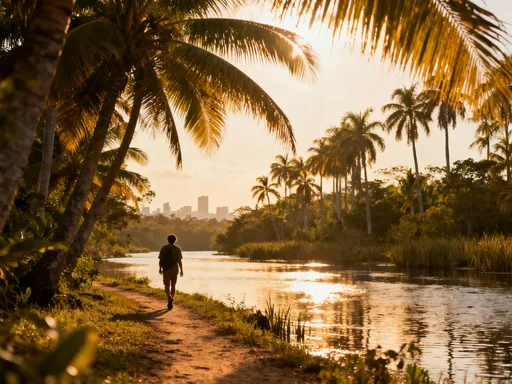
What sets Curitiba apart is how its green network connects rather than isolates. A system of green corridors—linear parks and tree-lined avenues—links major parks to smaller neighborhood plazas and schoolyards. This connectivity allows wildlife to move through the city, supports pollinators, and gives people continuous access to nature, even in densely populated areas. Children walk to school under canopies of trees, commuters cycle along shaded paths, and families gather in pocket parks within walking distance of their homes. This integration of nature into daily routines fosters physical activity, mental well-being, and a stronger sense of place.
Equally important is the city’s commitment to equitable access. Unlike some cities where green space is concentrated in wealthier districts, Curitiba has deliberately distributed parks across all zones, including lower-income communities. The city’s “Green Exchange” program, which began in the 1990s, allowed residents in underserved areas to trade recyclable materials for fresh produce and bus tickets, while also funding local greening projects. This innovative approach not only improved environmental conditions but also empowered communities, turning sustainability into a shared responsibility. Parks in these neighborhoods were designed with input from residents, ensuring they met real needs—safe play areas for children, shaded seating for elders, and open spaces for cultural events.
Revolution on Wheels: The Bus That Shaped a City
If Curitiba has a signature innovation, it’s the Rede Integrada de Transporte (RIT), its integrated bus system. Launched in the 1970s, the RIT was revolutionary in its simplicity and effectiveness. Instead of investing in an expensive subway, city planners created a high-capacity bus network that operates with the efficiency of rail at a fraction of the cost. Today, the system carries over 2 million passengers daily, with buses arriving as frequently as every 90 seconds during peak hours. For a city of 1.9 million people, this level of service is remarkable—and transformative.
The heart of the system lies in its tube-shaped boarding stations. These enclosed, elevated platforms allow passengers to pay fares before entering, eliminating delays at the door. Buses pull up, align precisely with platform doors, and open simultaneously, enabling fast, level boarding—similar to a metro system. The stations are climate-controlled, well-lit, and staffed, enhancing safety and comfort. This attention to detail makes public transit not just functional but dignified, encouraging widespread use across social classes. Unlike in many cities where buses are seen as a last resort, in Curitiba, they are a preferred choice for professionals, students, and families alike.
The RIT’s success is rooted in its integration with urban planning. The city developed five main transit corridors, each anchored by high-capacity bus lanes flanked by mixed-use, medium- to high-density development. This transit-oriented design encouraged compact growth, reduced car dependency, and made daily commutes efficient and predictable. Residential, commercial, and civic buildings were clustered around bus stops, creating walkable neighborhoods where people could live, work, and access services without needing a car. This model not only reduced traffic congestion but also lowered greenhouse gas emissions, contributing to cleaner air and a quieter urban environment.
Perhaps most impressively, the system was built incrementally, allowing the city to test, refine, and expand based on real-world performance. When the first express bus line launched in 1974, it used existing roads and modest upgrades. As ridership grew, the city added dedicated lanes, improved stations, and expanded feeder routes. This phased approach kept costs manageable and allowed for continuous public feedback. The result is a system that feels both robust and adaptable—a model now studied and replicated in cities from Bogotá to Jakarta. Curitiba proved that transformative infrastructure doesn’t require massive budgets—just vision, political will, and a focus on user experience.
Pedestrian Power: Reclaiming Streets for People
In the heart of Curitiba’s historic district, two spaces stand out as symbols of human-centered urban design: Largo da Ordem and Rua XV de Novembro. Once ordinary city streets, they have been transformed into vibrant, car-free zones that pulse with life. On any given day, these areas are filled with street performers, open-air markets, outdoor cafés, and families strolling without fear of traffic. The absence of vehicles creates a rare sense of freedom and safety, allowing people to linger, interact, and simply enjoy being in public space.
Largo da Ordem, surrounded by restored 19th-century buildings, hosts a popular weekend arts and crafts fair. Artists, potters, and textile makers display their work under colorful canopies, while musicians play in the central plaza. Children run freely, elders sit on benches exchanging stories, and tourists wander with cameras in hand. The space feels alive, not because of grand architecture alone, but because it is used intensively and joyfully by real people. Rua XV de Novembro, one of the longest pedestrian-only streets in Brazil, functions as a commercial and social spine, lined with bookstores, bakeries, and family-owned shops. Its wide sidewalks and shaded areas make it comfortable year-round, encouraging foot traffic and spontaneous encounters.
The transformation of these areas was not immediate. The city adopted an incremental strategy, closing streets to vehicles one at a time and monitoring the impact on commerce, mobility, and public satisfaction. To the surprise of skeptics, local businesses reported increased sales—pedestrians tend to spend more time and money than drivers passing through. Air quality improved, noise levels dropped, and public events became easier to organize. Encouraged by these results, the city expanded the pedestrian network, creating a connected system of car-free zones that now serve as the city’s social and cultural heart.
This approach offers a powerful lesson for cities worldwide: reclaiming space for people doesn’t require radical upheaval. Small, data-driven changes can yield significant benefits. By prioritizing walkability, Curitiba enhanced not only mobility but also community cohesion. When people are given safe, attractive places to gather, social bonds strengthen. Neighbors recognize each other, local economies thrive, and public space becomes a true commons—a shared asset that belongs to everyone.
Architecture with a Purpose: Form Meets Function
Curitiba’s built environment reflects a deep commitment to purposeful design. Architecture here is not about spectacle or status—it’s about serving the public good. From cultural institutions to municipal buildings, the city’s structures are designed to be accessible, sustainable, and socially inclusive. This ethos is evident in landmarks like the Oscar Niemeyer Museum, a striking white structure perched on a hill, and in humble yet vital projects like the Feirinha do Largo, a market housed in a repurposed warehouse.
The Oscar Niemeyer Museum, affectionately known as “The Eye,” is more than an architectural icon. Its bold curves and panoramic views draw visitors, but its programming ensures it remains rooted in community life. The museum hosts rotating exhibitions on art, science, and urbanism, many of which are free or low-cost. Educational workshops, film screenings, and public lectures make it a hub for lifelong learning. Its outdoor plaza doubles as a gathering space for festivals and civic events, blurring the line between culture and public life. Even its design supports sustainability, with natural ventilation and lighting reducing energy use.
Equally significant are the city’s adaptive reuse projects. The Feirinha do Largo, for example, transformed an abandoned industrial building into a thriving weekend market. Local farmers, artisans, and food producers now sell fresh produce, handmade goods, and traditional dishes in a covered, weather-protected space. The market supports small-scale entrepreneurs, reduces food miles, and strengthens local supply chains. Similar projects have converted old factories into libraries, community centers, and youth hubs, bringing services to neighborhoods that once lacked them.
Municipal buildings also reflect this philosophy. City halls, health clinics, and public schools are designed with accessibility in mind—ramps, wide doorways, and clear signage ensure they are usable by people of all ages and abilities. Many incorporate green roofs, solar panels, and rainwater harvesting systems, setting an example for sustainable construction. The message is clear: public buildings should not only serve their function but also embody the values of equity, efficiency, and environmental stewardship. In Curitiba, architecture is not a luxury—it’s a tool for social progress.
Community in the Details: How Public Spaces Build Belonging
While grand projects capture headlines, it’s the small, thoughtful details that make Curitiba feel truly livable. Benches are positioned to face each other, encouraging conversation. Bus stops are shaded and equipped with seating, making waits more comfortable. Public restrooms are clean and available, a simple amenity that significantly enhances dignity and accessibility. Bike racks are plentiful, supporting the city’s growing cycling culture. These elements may seem minor, but together they signal a deep respect for the everyday experiences of residents.
Lighting is another area of careful attention. Streets and parks are well-illuminated, not with harsh, glaring fixtures, but with warm, human-scaled lighting that enhances safety without creating light pollution. Signage is clear, consistent, and multilingual, helping visitors navigate with ease. Playgrounds are designed for inclusivity, with equipment accessible to children with disabilities. Even waste bins are strategically placed and regularly emptied, reducing litter and maintaining cleanliness.
Beyond physical infrastructure, the city fosters belonging through shared use of space. Schoolyards are open to the public after hours, becoming informal parks for nearby residents. Community gardens dot vacant lots, giving neighbors the chance to grow food and build relationships. Public plazas host free exercise classes, music performances, and cultural festivals, drawing people from diverse backgrounds into shared experiences. These initiatives are often co-managed by local associations, ensuring they reflect community needs and values.
The cumulative effect is a city that feels deeply connected. People don’t just live in Curitiba—they participate in it. Whether attending a neighborhood meeting, volunteering at a greening project, or simply chatting with a vendor at the market, residents have multiple pathways to engagement. This sense of ownership strengthens social trust and resilience, making the city not just well-designed, but truly communal.
Lessons Beyond Brazil: Why Curitiba Matters Globally
Curitiba is not without challenges. Like many cities, it faces issues of inequality, suburban sprawl, and the pressures of climate change. Yet its legacy in sustainable urbanism remains profound. What makes Curitiba a global model is not perfection, but principle: the belief that cities should serve people, not machines; that planning must be long-term and integrated; and that innovation can emerge from constraint.
Its lessons are especially relevant today, as cities worldwide grapple with overcrowding, pollution, and social fragmentation. Curitiba shows that transformative change doesn’t require futuristic technology or unlimited funding. It requires leadership, community involvement, and a willingness to prioritize the common good. The city’s success with bus rapid transit has inspired similar systems in over 160 cities. Its green space network offers a blueprint for climate-resilient urban design. Its pedestrian zones demonstrate how reclaiming streets can revitalize local economies and strengthen social ties.
Perhaps most importantly, Curitiba proves that urban life can be both efficient and humane. In an era when many cities feel alienating or overwhelming, it offers a vision of what’s possible: a place where nature and infrastructure coexist, where public transit is a source of pride, and where every resident—regardless of income—can access beauty, safety, and opportunity. For travelers, it’s not just a destination to visit, but a story to carry forward. The future of cities may not be found in skyscrapers or smart gadgets, but in the quiet, deliberate choices that make urban life feel, quite simply, like home.