Plovdiv’s Hidden Art Soul: Where Ancient Walls Breathe Creativity
Walking through Plovdiv, I wasn’t just stepping over cobblestones—I was tracing the lines of an open-air gallery carved by time. You know that feeling when history and art collide in the most unexpected places? That’s Plovdiv. This city doesn’t shout; it whispers stories through frescoed walls, mosaic courtyards, and theaters where whispers still echo from 2,000 years ago. If you think ancient cities are just ruins, wait till you see how Plovdiv paints the past alive. Nestled in the Thracian Valley, surrounded by seven hills and cradled by the Maritsa River, Plovdiv offers a rare blend of continuity and creativity. As one of Europe’s oldest continuously inhabited cities, its streets are not merely pathways but layers of human expression—each stone, mural, and melody carrying forward a legacy of resilience and imagination.
First Impressions: Stepping Into a Living Canvas
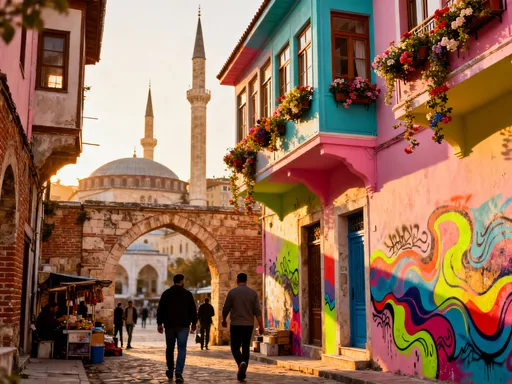
Arriving in Plovdiv, travelers are greeted not by towering modern developments but by a city that unfolds like a carefully curated painting. The skyline is softened by green hills, and the air carries a quiet energy—neither rushed nor silent, but thoughtful. As visitors climb the cobbled paths toward the historic core, they enter a world where time seems layered rather than linear. Here, 19th-century National Revival houses with pastel facades and intricately carved wooden balconies stand alongside bold contemporary murals that stretch across entire building fronts. These are not random acts of graffiti but intentional works of art, often commissioned during cultural festivals or in collaboration with local communities.
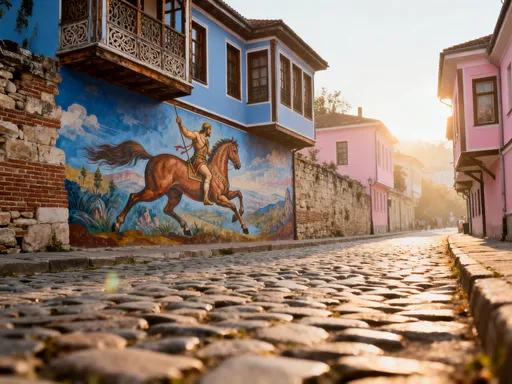
What sets Plovdiv apart from other historic European cities is how naturally art integrates into everyday life. Unlike destinations where galleries are confined to sterile buildings, Plovdiv treats the entire urban landscape as a canvas. A corner bakery might sit beneath a massive mural depicting ancient Thracian warriors, while a quiet alley reveals a mosaic embedded in the pavement, illustrating scenes from local folklore. This seamless blend of old and new creates a sensory experience that feels authentic and deeply personal. There’s no forced aesthetic—just a city that has learned to express itself across centuries, using every available surface to tell its story.
The first glimpse of the Old Town from Nebet Tepe, one of the seven ancient hills, offers a panoramic view of this harmony. Red-tiled roofs cascade down the slope, interwoven with patches of greenery and flashes of color from street art. It’s easy to understand why Plovdiv was named a European Capital of Culture in 2019—an honor that didn’t transform the city so much as reveal what had always been there: a quiet confidence in its artistic soul.
The Old Town: A Masterpiece in Pastel and Stone
At the heart of Plovdiv lies its UNESCO-recognized Old Town, a district where architecture becomes autobiography. Wandering through its narrow, winding streets, one encounters homes that were once residences of wealthy merchants during the Bulgarian National Revival period of the 18th and 19th centuries. These houses are more than preserved relics—they are intricate expressions of identity, blending Ottoman craftsmanship with European neoclassical influences and Byzantine decorative motifs. Their facades, painted in soft peach, mint green, and dusty rose, exude warmth and elegance, while their interiors reveal even greater depth.
Take the Balabanov House, for instance, now operating as a cultural venue and museum. Built in the early 1800s, it features a central courtyard surrounded by arched wooden galleries, with rooms adorned with hand-painted ceilings, stucco moldings, and symbolic frescoes. Every detail—from the placement of windows to the carvings on door frames—reflects a philosophy of balance between light, space, and nature. Similarly, the Hindliyan House, funded by a merchant’s fortune made in Istanbul, dazzles with its opulent interiors, including imported Italian chandeliers, Viennese wallpaper, and handcrafted furniture. Yet despite their grandeur, these homes never feel ostentatious; instead, they radiate a sense of lived-in dignity.
What makes the preservation of these buildings so meaningful is the intention behind it. Restoration projects in Plovdiv’s Old Town are guided by principles of authenticity and respect for original materials. Local artisans use traditional techniques to repair wooden beams, restore frescoes, and replicate lost decorative elements. This isn’t about creating a theme park version of history—it’s about maintaining a living connection to the past. Visitors walking through these homes don’t just see history; they feel its texture, smell the aged wood, and hear the soft echo of footsteps on century-old floors. In this way, the Old Town functions not merely as a tourist destination but as a cultural anchor, reminding both locals and guests of the enduring value of craftsmanship and heritage.
The Ancient Theatre of Philippopolis: When Drama Meets History
Perched on the southern slope of the ancient hill of Nebet Tepe, the Ancient Theatre of Philippopolis stands as one of Plovdiv’s most awe-inspiring monuments. Constructed in the 2nd century AD during the reign of Emperor Trajan, this grand Roman odeon was designed to seat up to 7,000 spectators and served as a center for political gatherings, musical performances, and theatrical productions. Today, after extensive archaeological restoration, it remains fully functional—a rare example of an ancient theater still used for live performances. As sunlight glints off the white marble steps and the surrounding hills shimmer in the distance, the space evokes a profound sense of continuity between past and present.
One of the most remarkable features of the theater is its acoustics. Even without amplification, a whisper spoken on the stage can be clearly heard in the highest rows—a testament to the advanced engineering of Roman architects. During summer evenings, when concerts and classical plays are held here, audiences experience more than entertainment; they participate in a ritual that spans millennia. The atmosphere is electric yet reverent, as if the stones themselves remember the voices of orators, actors, and musicians who once filled the air with sound.
Visiting the theater during the day allows for quiet contemplation. Walking down the semicircular tiers, one can imagine the vibrant public life that once unfolded here—debates under the open sky, celebrations marked by music and poetry, and the shared experience of storytelling in a society that valued civic engagement. The panoramic view of modern Plovdiv from the stage adds another layer of meaning, visually connecting ancient foundations with contemporary life. For families and travelers interested in culture and history, attending a performance here offers a uniquely immersive experience—one that transcends typical sightseeing and invites emotional resonance with the layers of time embedded in the city’s foundation.
Kapana Creative District: Street Art with Soul
If the Old Town represents Plovdiv’s historical elegance, Kapana embodies its creative rebirth. Once an industrial neighborhood filled with workshops and factories, Kapana—meaning “The Trap” in Bulgarian—has been transformed into the city’s beating artistic heart. Its maze of narrow cobbled streets now pulses with life, hosting independent art galleries, design studios, artisan cafes, and performance spaces. What was once overlooked is now celebrated, proving that urban renewal doesn’t require demolition—just vision and community engagement.
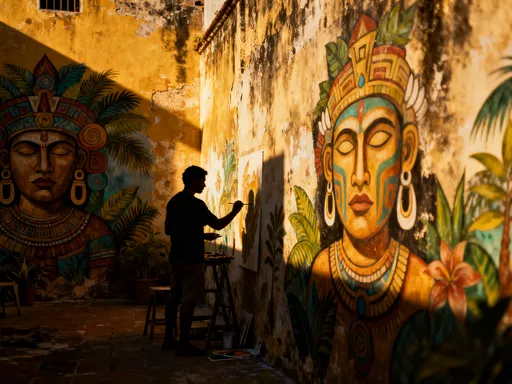
Street art in Kapana is not vandalism; it is dialogue. Murals cover entire building facades, telling stories of identity, memory, and transformation. Some pay homage to local legends, while others reflect global themes like environmental awareness or cultural exchange. One striking piece depicts a child holding a key made of light, symbolizing hope and access to knowledge. Another portrays a woman weaving threads that morph into cityscapes, representing the interconnectedness of tradition and innovation. These works are often created during the annual Street Art Festival Plovdiv, which invites artists from across Europe to collaborate with local creatives, ensuring that the district’s visual language remains dynamic and inclusive.
Beyond the walls, Kapana thrives as a social space. Independent coffee roasters serve slow-brewed blends in minimalist settings, while craft boutiques offer handmade jewelry, textiles, and ceramics. Live music spills out of basement venues, and pop-up exhibitions appear in former storage units. The district encourages exploration—there are no rigid itineraries, only serendipitous discoveries around every corner. For travelers seeking authenticity, Kapana offers a refreshing alternative to commercialized tourist zones. It’s a place where creativity isn’t packaged for consumption but lived daily by those who call it home.
Public Art & Urban Storytelling: The City as a Gallery Without Walls
In Plovdiv, art doesn’t wait to be found behind museum doors—it reveals itself in the rhythm of daily life. Throughout the city, public installations invite pause and reflection. Bronze sculptures appear unexpectedly: a tailor bent over his workbench near a quiet square, a musician mid-performance tucked beside a staircase, or the famous Iron Wedding, a sculptural embrace between two rusted beams symbolizing unity and resilience. These pieces don’t dominate their surroundings; they blend into them, becoming part of the city’s quiet narrative.
Mosaic art is another recurring theme. Sidewalks in certain neighborhoods feature intricate tile work depicting floral patterns, zodiac signs, or mythological creatures. During special events like the Plovdiv Night of Museums, the city transforms after dark with light projections mapping historical buildings, turning facades into moving canvases that tell stories of migration, trade, and cultural fusion. These temporary installations draw crowds not for spectacle alone, but for shared experience—a moment when residents and visitors alike stop, look up, and connect.
Perhaps the most iconic example of urban storytelling is the Orpheus Fountain, located near the Roman Stadium. Dedicated to the mythical Thracian musician believed to have been born in the region, the fountain features bronze figures emerging from water, their instruments raised in silent song. Locals often leave small offerings—flowers, notes, or stones—around its base, turning it into a living monument of collective memory. Such spaces remind us that art, at its best, is participatory. It doesn’t just decorate the city—it helps define its soul.
Art-Inspired Itineraries: How to Experience Plovdiv Like a Culture Hunter
To truly appreciate Plovdiv’s artistic depth, travelers should approach the city with curiosity and slowness. A recommended route begins in the Old Town, where morning light enhances the soft hues of the National Revival houses. Start at the Ethnographic Museum, housed in the Kuyumdzhioglu House, then walk toward the Church of the Assumption, known for its frescoes and role in Bulgaria’s cultural awakening. From there, ascend to the Ancient Theatre for a guided tour, ideally timed to coincide with a rehearsal or concert.
In the afternoon, descend into Kapana, where lunch at a locally owned bistro can be followed by visits to galleries like Rampa or BAZA. Many spaces host rotating exhibitions, often featuring emerging Bulgarian artists. Pick up a self-guided street art map from the tourist office or download a mobile app that highlights lesser-known murals and sculptures. As evening falls, enjoy dinner at a garden cafe in Kapana, where live acoustic sets often accompany meals. On weekends, check the cultural calendar—performances, poetry readings, and craft markets frequently take place in repurposed courtyards.
For those with more time, day trips to nearby archaeological sites like the Thracian Tomb of Kazanlak or the Bachkovo Monastery add historical context to Plovdiv’s artistic lineage. Spring and early autumn offer ideal weather, with mild temperatures and fewer crowds. Guided walking tours led by local historians or artists provide deeper insight, especially those focused on architecture, urban design, or the symbolism behind public art. The key is to engage—not just observe. Ask questions, support local makers, and allow the city to unfold at its own pace.
Why Plovdiv’s Art Endures: A Testament to Cultural Resilience
The true magic of Plovdiv lies not in any single monument or mural, but in its ability to absorb change without losing its essence. Over thousands of years, the city has been shaped by Thracians, Romans, Byzantines, Ottomans, and modern Bulgarians—each leaving marks that were not erased but built upon. This layering is visible not only in its physical landscape but in its cultural mindset. Art in Plovdiv is not a luxury; it is a form of survival, a way of asserting identity through periods of upheaval and transformation.
Today’s creative revival—seen in restored homes, vibrant street art, and active performance spaces—is not a trend but a continuation of this legacy. It reflects a deep understanding that beauty and meaning are essential to human life. When a muralist paints over an old factory wall, they are not erasing the past but conversing with it. When a musician performs in the Ancient Theatre, they are not reenacting history but keeping it alive. And when a visitor pauses to admire a hidden sculpture or runs a hand over a centuries-old fresco, they become part of this ongoing story.
Plovdiv invites us to rethink what it means to travel. It challenges the notion that ancient cities are frozen in time, showing instead how they can evolve while honoring their roots. Its art is not loud or demanding—it is patient, reflective, and deeply rooted. To walk through Plovdiv is to feel the pulse of a city that knows how to listen, remember, and create. For the thoughtful traveler, especially those who value depth over spectacle, Plovdiv offers something rare: a place where every stone has a story, and every story finds its voice in color, sound, and form. Come not just to see, but to feel—the art beneath the surface.